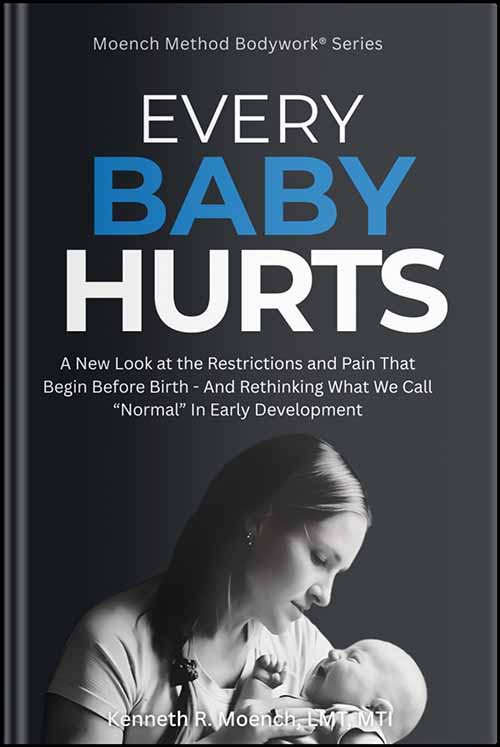
Our Story
From pushing barges on the Mississippi River to developing a unique approach to helping people overcome pain.
If someone had told me when I was younger that I would spend my life helping people overcome pain through a method of bodywork I developed myself, I probably would have laughed. My career certainly didn't begin that way.
My first job was delivering newspapers when I was 12 years old. Over the years, I worked in fast-food restaurants, in retail management, as a deckhand pushing barges along the Mississippi River and Louisiana's waterways, and eventually as an industrial electrician. I was always searching for my purpose.
I had a pretty simple way of knowing when it was time for a change. When I disliked a job enough to call in sick when I wasn't sick, I knew it was time to find another direction!
Sometimes a Setback Is a New Beginning
Industrial electrical work provided a decent living, but construction projects eventually ended, often leaving me looking for another job. When I finally landed what I thought was a permanent maintenance position at a clean industrial plant, I believed I'd found some stability. Then, unexpectedly, I was laid off.
I was married with two children, and I needed a more dependable way to support my family. After considerable prayer and reflection, I decided to do something I'd been considering for years. I went back to school.
Ten years after graduating from high school, I enrolled at Louisiana State University in Baton Rouge to take prerequisite courses for physical therapy, and I began working as a physical therapy aide at a clinic near my home. For the first time, I felt I was moving toward something that truly suited me.
Three years later, I moved to Austin, Texas, where I worked in physical therapy departments at area hospitals while attending the University of Texas. Eventually, I was just three classes away from completing my undergraduate degree. There was only one problem: those classes were offered in the middle of the workday, when I needed to be earning a living.
I needed a workaround.
The Decision That Changed Everything
Although I'd never received a professional massage and had almost no experience giving one, I enrolled in massage therapy school. Classes were held on evenings and weekends, which fit my schedule. I figured massage therapy would be a valuable skill once I became a physical therapist, and it might give me the flexibility to finish my remaining courses.
Little did I know that this decision would completely change my future.
After I completed massage school and became licensed in 1993, my supervisor at the hospital invited me to begin providing massage therapy to patients instead of continuing my physical therapy aide duties. I jumped at the opportunity.
Using what I'd learned in school, particularly deep-tissue techniques, I began working with people experiencing pain and movement restrictions. What happened surprised everyone, including me. Many patients reported substantial relief after only one or two sessions. The physical therapists I worked alongside were impressed, and I began to wonder whether I should keep pursuing physical therapy or concentrate on the hands-on work that seemed to be producing such encouraging results.
Ultimately, the decision wasn't difficult. My goal had never been to earn a particular professional title. My goal was to help people get out of pain as quickly and effectively as possible.
"My goal had never been to earn a particular professional title. My goal was to help people get out of pain as quickly and effectively as possible."
Finding a Better Way
Shortly after massage school, I took three introductory continuing-education courses: myofascial release, deep-tissue techniques, and trigger-point therapy. Each offered something valuable. But I began wondering what might happen if I combined elements of these approaches.
Could I help people more efficiently? Could I identify relationships between painful areas and restrictions elsewhere in the body? Could the sequence in which I addressed those restrictions influence the results?
I began experimenting, observing, and refining my approach. And I prayed. I prayed for wisdom, knowledge, and discernment to understand how to help people as effectively as possible.
My faith has always been central to this journey. I firmly believe that without God's guidance, I would never have developed the approach that eventually became Moench Method Bodywork.
Over time, I began to recognize what appeared to be recurring patterns of soft-tissue restriction and compensation. Sometimes, addressing an area far removed from the original complaint seemed to improve movement or comfort elsewhere. I became increasingly interested in understanding those relationships.
Building a Business From the Trunk of My Car
In the beginning, my business operated out of the trunk of my car. I carried a portable massage table to clients' homes and offices, working evenings while keeping my hospital job. As demand grew, I cut back my hospital hours, and once I was consistently seeing three or four clients a day, I left the hospital to focus on my practice.
For about three years, I traveled throughout Austin providing bodywork. Eventually, I realized I was spending valuable time driving between appointments when I could have been helping more people. Fortunately, my primary massage instructor had a clinic and invited me to work there. I accepted.
Over the next couple of years, referrals from physicians, physical therapists, and satisfied clients kept growing. Eventually, a colleague and I opened our own clinic, Therapy Central, Bodywork Professionals, in downtown Austin. With four treatment rooms and additional therapists joining us, business was booming.
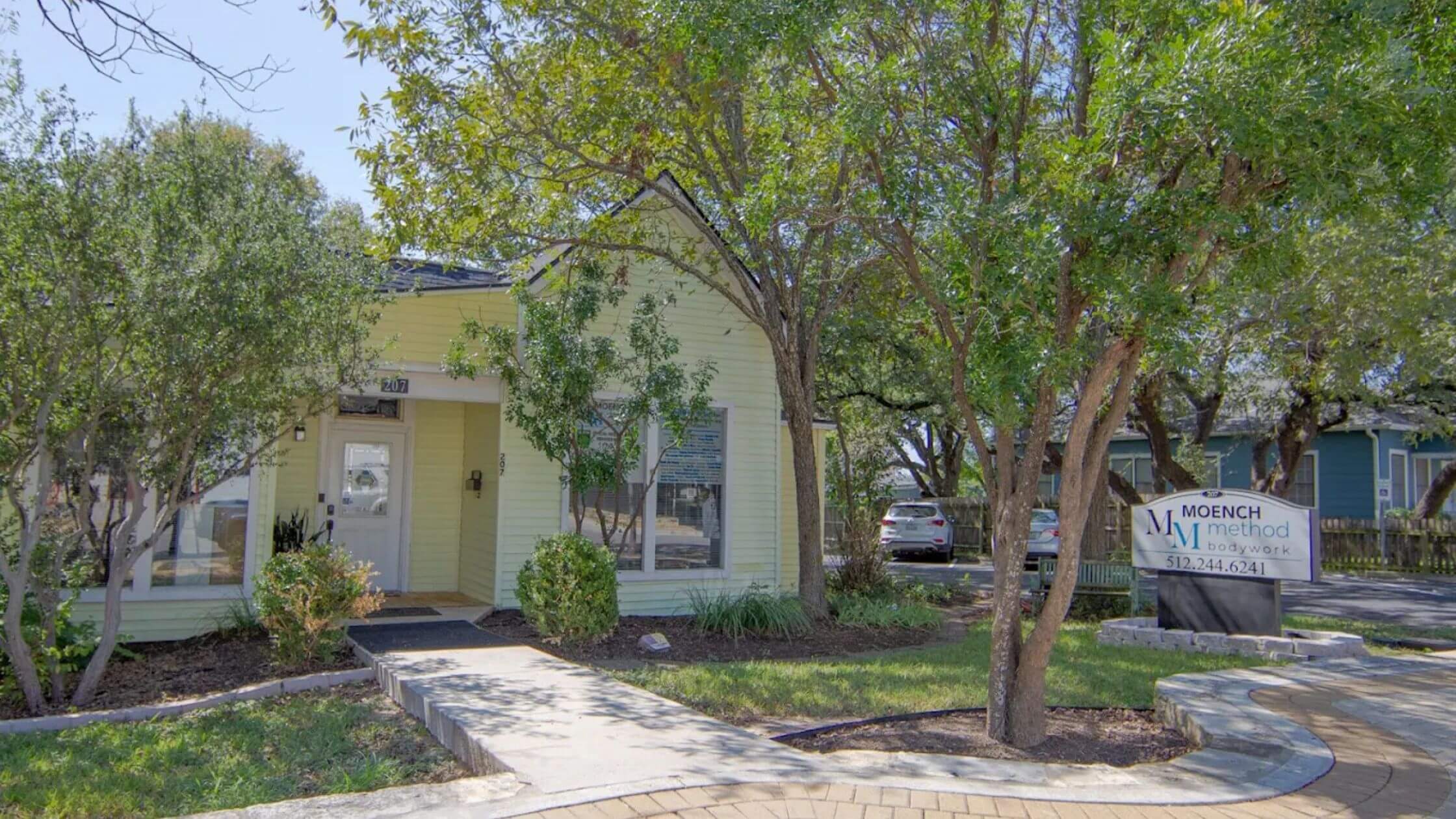
Meanwhile, my wife and I had bought a home in Round Rock, just north of Austin. Anyone familiar with Austin traffic can probably appreciate what happened next! Opening another office closer to home seemed like a very good idea. We found a little yellow house in downtown Round Rock and bought it.
In November 1999, Therapy Central of Round Rock opened its doors.
The Phone Call I'll Never Forget
For years, our practice offered both traditional massage and the more focused corrective bodywork I'd been developing. Then one day, I received a phone call that changed the direction of our business.
A woman was in tremendous pain. She asked whether I had any appointments available that day. If I couldn't see her, she explained, she was going to have to visit the emergency room.
I checked our schedule. We were completely booked. But about half of our appointments were for traditional relaxation massage. I couldn't make room for someone who desperately needed help.
That bothered me. There were already thousands of massage therapists in the area providing relaxation massage. But the specialized work we were doing with people experiencing pain and movement limitations was much less widely available.
I made a decision that day. We would stop offering traditional relaxation massage and dedicate our appointments to the corrective bodywork we'd developed.
It wasn't an easy business decision. At first, we lost clients and considerable income. But I hadn't entered this profession simply to make money. I wanted to help people who were hurting, and I wanted to make sure that when the next desperate person called, we had a better opportunity to help.
Looking back, that decision was one of the most important turning points in our history.
"I wanted to make sure that when the next desperate person called, we had a better opportunity to help."
A New Name for a Growing Practice
As our work expanded into additional communities throughout Central Texas, we ran into an unexpected problem: our name. Therapy Central of Round Rock had served us well, but people living elsewhere often assumed they had to travel to Round Rock for treatment.
We needed a name that reflected both our expanding practice and the distinctive approach we'd developed. After considering many possibilities, we settled on Moench Method Bodywork.
The name accomplished several things. It gave our approach an identity of its own, made it easier for people to tell our services apart from traditional massage, and helped establish a recognizable presence online. Our corporation remains Therapy Central of Round Rock, P.C., while Moench Method Bodywork is the name under which we operate today.
The Human Body Is Like a Puzzle Box
Throughout my career, I've become increasingly fascinated with how different areas of the body appear to influence one another. We continually observe our clients before, during, and after treatment, looking for possible relationships between areas of pain, movement restrictions, and physical compensation.
Over the years, I've come to think of the human body as something like a puzzle box. Sometimes, releasing one restriction appears to make another area easier to address.
The sequence matters.

In my experience, approaching restrictions in a thoughtful order can make sessions more comfortable and may help clients achieve better results. This observation has become a central part of the philosophy behind Moench Method Bodywork.
Our work has expanded to include infants, children, adults, and athletes, but our underlying curiosity remains the same. We want to understand why people hurt, why certain movement patterns develop, and how we might help.
More Than 30 Years Later, We're Still Learning

Today, Moench Method Bodywork serves clients throughout Central Texas. We've grown far beyond that portable massage table in the trunk of my car. But I still approach my work with the same curiosity that led me to combine those three introductory techniques so many years ago.
I don't believe we've discovered everything there is to know about the human body. Not even close. We continue to observe, question, experiment, refine our approach, and learn from the people who trust us with their care.
Moench Method Bodywork is still a work in progress. There is always more to learn!
And when I think back to that young man pushing barges down the Mississippi River, searching for his purpose, I can't help but smile. I certainly didn't know where the journey would lead. But I'm grateful it brought me here.