
Have you ever experienced pain that just keeps coming back? Maybe it's your lower back. Perhaps it's your shoulder, neck, hip, or knee. You stretch it. You massage it. You apply heat or ice. Maybe you take something for the pain.
You feel better for a while. But eventually, the pain returns.
After more than 30 years of working with the human body, I've come to believe there's an important question that often gets overlooked:
What if the place that hurts isn't where the problem started?
It's a question that has shaped my entire approach to bodywork.
Pain Is a Signal, Not Always a Roadmap
When something hurts, our natural instinct is to focus on that location. If your knee hurts, you think there's something wrong with your knee. If your lower back hurts, you assume the problem must be in your lower back.
And sometimes, that's exactly right.
Pain can originate from an injury, inflammation, irritated nerves, damaged tissues, or other conditions in the painful area itself. But our bodies don't function as collections of independent parts. Muscles, tendons, ligaments, fascia, joints, and nerves work together to produce movement and maintain stability.
When one area isn't moving or functioning as well as it should, other areas may have to adapt. And those adaptations can sometimes contribute to discomfort somewhere else.
That's where things get interesting.
Your Body Is a Master at Compensating
One of the remarkable things about the human body is its ability to adapt. Imagine you've sprained your right ankle. For several weeks, you walk differently to avoid putting too much weight on that foot. Your stride changes. You may shift more weight to the opposite leg. Your hips and back may move differently as you compensate. Even after the ankle heals, some of those altered movement patterns may remain.
Now imagine that several months later, you begin experiencing discomfort in your hip or lower back.
Could the original ankle injury be contributing? Possibly.
That doesn't mean every case of back pain originates in an old ankle injury. It means that when evaluating persistent pain, it can be useful to look beyond the immediate location of the symptoms. Sometimes the painful area is where the body is experiencing the consequences of a problem, rather than where that problem began.
The Role of Fascia
One of the tissues I've become particularly interested in throughout my career is fascia. Fascia is connective tissue found throughout the body. It surrounds, supports, and connects muscles and many other structures. It also plays a role in transmitting mechanical forces during movement.
When people think about tightness, 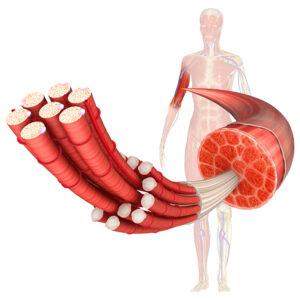 they usually think about muscles. But movement restrictions can involve more than muscle tissue alone. Fascia, joints, tendons, nerves, and the nervous system can all influence how freely and comfortably we move.
In my clinical experience, I've frequently encountered areas of soft-tissue restriction that appear to be associated with discomfort or limited movement elsewhere. Sometimes, addressing those restrictions seems to improve how another part of the body feels or functions. These observations have been central to developing Moench Method Bodywork.
However, it's important to distinguish what I observe clinically from what research has established. The exact contribution of fascial restrictions to many chronic pain conditions is still being investigated. And no single tissue explains every painful condition.
The Human Body Is Like a Puzzle Box
Over the years, I've come to think of the human body as something like a puzzle box. If you've ever worked with one of those mechanical puzzles, you know that pulling harder on the wrong piece usually doesn't solve anything. Sometimes you have to move one piece before another will move.
I've observed something similar while working with soft-tissue restrictions. Rather than immediately concentrating on the area causing the most pain, we look for the restriction that appears to have the greatest influence on the body's overall tension and sensitivity.
Our goal is to begin with the area we believe is having the greatest impact on the nervous system at the body's core.
From there, we work down the chain of restrictions, addressing each area in the order we believe it is affecting the nervous system until we reach the end of that chain. This sequence is central to the Moench Method approach.
In my experience, when we address the restrictions in the order the body appears to respond best to, subsequent areas often become less sensitive and easier to work with. Beginning directly at the painful area, particularly when it is already highly irritated, can sometimes aggravate the discomfort without addressing other contributing restrictions. It's like trying to open a puzzle box by forcing the last piece before releasing the first. Sometimes the most important place to begin isn't where the pain is greatest. It's where we believe we can make the greatest difference in how the body responds.
This is a clinical principle developed through observation, rather than a neurologically validated treatment sequence. We continue to refine it as we learn more.
Your Daily Habits May Be Keeping You Tight
There's another important part of the picture that often gets overlooked. What are you doing every day that may be contributing to the same patterns of discomfort?
Even when a person experiences significant improvement following treatment, the physical demands of everyday life may continue to influence how their body feels and moves.
Three areas deserve particular attention.
1. Your Sleeping Position
 Most people spend approximately one-third of their lives sleeping. Consider what happens when you spend hours in a position that places your neck, shoulders, hips, or lower back under sustained stress. Sleeping with your head turned sharply to one side, your arm positioned awkwardly, or your spine unsupported may contribute to morning stiffness or discomfort.
For some people, changing pillow height, mattress support, or sleeping position can improve comfort. There isn't one perfect sleeping position for everyone. The goal is to find a position that allows you to rest comfortably without consistently aggravating your symptoms.
2. Your Working Posture
Think about how many hours you spend at work.Perhaps you're sitting at a computer, leaning forward over a desk, driving long distances, or repeatedly reaching and lifting. Even physically demanding jobs can involve prolonged periods in similar positions. These activities place repeated demands on particular muscles and joints.
Over time, those demands may contribute to fatigue, discomfort, or movement limitations. Sometimes the solution isn't simply to sit or stand straighter. It may involve adjusting your workstation, changing positions more frequently, taking movement breaks, or improving strength and endurance.
Your best posture is often your next posture. In other words, movement and variety are important.
3. How You Stand and Move
Have you ever noticed yourself standing with most of your weight on one leg? Perhaps you habitually shift your hip to one side or lock your knees while standing.
These habits aren't automatically harmful, but repeatedly loading the same areas can contribute to discomfort in some people.
Previous injuries, occupational demands, and individual movement habits may also influence how weight is distributed throughout the body.
I encourage clients to become more aware of these patterns without becoming overly concerned about maintaining perfect posture. The goal isn't to hold your body rigidly in an ideal position. It's to develop comfortable, adaptable movement habits.
Why Does Pain Keep Coming Back?
People frequently ask me why they've experienced only temporary relief from previous treatments. There isn't one answer.
Recurring pain can have many causes, including unresolved injuries, repetitive physical demands, insufficient rehabilitation, underlying medical conditions, and changes in how the nervous system processes pain. But one possibility worth investigating is whether contributing movement limitations have been overlooked. Another is whether daily habits continue to aggravate the same areas.
Consider someone who repeatedly experiences shoulder discomfort. They may focus exclusively on stretching or massaging the shoulder. Yet shoulder movement also depends on the shoulder blade, rib cage, upper back, and surrounding muscles. If one of those areas isn't functioning comfortably, it may influence how the shoulder moves. And if that person spends eight hours a day working with their shoulders elevated or their head leaning forward, their daily routine may be contributing to their discomfort.
In such cases, looking at the broader movement pattern and the demands of everyday life may reveal something that focusing only on the painful spot would miss. That doesn't mean treating another area will necessarily eliminate the pain. It means a broader assessment may help identify additional contributing factors.
Why I Developed a Different Approach
When I began my career as a massage therapist in 1993, I was working alongside physical therapists in hospital settings. I started noticing that some patients experienced substantial improvements in comfort and movement following hands-on treatment. I wanted to understand why.
I began combining elements of myofascial release, deep-tissue techniques, and trigger-point therapy, paying particular attention to relationships between different areas of the body. Over time, I developed an approach centered on observing movement, identifying possible soft-tissue restrictions, and considering how those restrictions might relate to a client's symptoms.
I also became increasingly interested in the sequence in which those restrictions were addressed. That approach eventually became Moench Method Bodywork.
More than three decades later, I'm still learning. I don't believe there's a single technique that can solve every problem. And I certainly don't believe every painful condition can be explained by soft-tissue restrictions.
But I do believe that asking better questions can lead to better assessments.
What Should You Do When Pain Keeps Returning?
If you've been dealing with recurring pain, here are a few things worth considering.
First, don't ignore persistent or worsening symptoms. Pain that continues, interferes with normal activities, or keeps returning deserves appropriate evaluation by a qualified healthcare professional.
Second, think beyond the painful area. Have you experienced previous injuries? Have your activities or movement patterns changed? Are certain movements consistently uncomfortable?
Third, pay attention to your daily habits. Consider your sleeping position, work environment, standing habits, and repetitive activities. Are you repeatedly placing demands on the same areas?
Fourth, remember that relief and recovery aren't always the same thing. Feeling better is important, but restoring comfortable movement, appropriate strength, and function may also require attention.
Finally, recognize that different problems require different solutions. Some respond well to exercise or rehabilitation. Others require medical treatment, and some may benefit from carefully selected hands-on therapies as part of a broader care plan.
Look Beyond Where It Hurts
After more than 30 years and thousands of hands-on sessions, one lesson continues to shape my work:
- The location of pain doesn't always tell us the whole story.
- Sometimes the painful area is the source of the problem.
- Sometimes it's one part of a much larger picture.
- And sometimes we have to look beyond the obvious to understand what may be contributing.
The human body is remarkably complex. I don't expect to stop learning about it anytime soon. That's one of the things I love most about my work. Because the question I've been asking throughout my career remains the same: What if we could help people more effectively by looking beyond where it hurts?